Add your promotional text...

How To Maintain Your Starter: for Beginners
BLOGSOURDOUGH STARTERTIPS AND TRICKS
5/13/20253 min read
So, you’ve made your sourdough starter—yay! 🎉 That’s the first big step in your sourdough baking journey. Now it’s time to learn how to maintain your starter so it stays healthy, active, and ready to help you bake amazing bread, pancakes, cookies, and more.
The good news? Maintaining your sourdough starter is way easier than you might think. Once you get into a rhythm, it becomes second nature. In this post, I’ll break down everything you need to know: how to feed your starter, how often to feed it, and how to tell when it’s ready to bake with.
Let’s dive in!
What is a Sourdough Starter?
A sourdough starter is a mix of flour and water that has been naturally fermented by wild yeast and beneficial bacteria from your environment. When you “feed” it regularly, it stays active and bubbly—ready to leaven bread without any commercial yeast.
Think of your starter like a little pet: it needs regular feeding, but it’s very low maintenance!
What You’ll Need to Maintain Your Starter
All-purpose flour (or whole wheat/rye flour if preferred)
Water (filtered or tap, room temp is best)
A clean jar or container with a loose-fitting lid
A kitchen scale (for easy feeding—highly recommended!)
Feeding Ratios (Using a Scale)
The most common feeding ratio is:
1:1:1 (Starter : Flour : Water)
Example:
50g starter
50g flour
50g water
This keeps things balanced and easy to scale up or down.
If you don’t have a scale, use:
¼ cup starter
¼ cup water
Scant ½ cup flour
How to Feed Your Starter
Remove and discard most of your starter—leave about 1–2 tablespoons in the jar.
Add equal parts flour and water (see above ratios).
Mix well until smooth and no dry flour remains.
Loosely cover the jar and let it sit at room temperature.
That’s it! You’ve just fed your starter.
How Often Should You Feed It?
It depends on how you store it:
🧊 If Stored in the Fridge:
Feed once a week
Take it out, discard all but 1–2 tablespoons, feed it, and let it sit at room temp for a few hours
Then put it back in the fridge
This method is best if you bake occasionally (once a week or less).
🌡️ If Kept at Room Temperature:
Feed every 12 to 24 hours
Ideal for daily bakers or when prepping for a bake
Your starter will be very active and ready to use regularly.
How Do You Know It’s Ready to Use?
Here are the signs that your starter is active and ready to bake with:
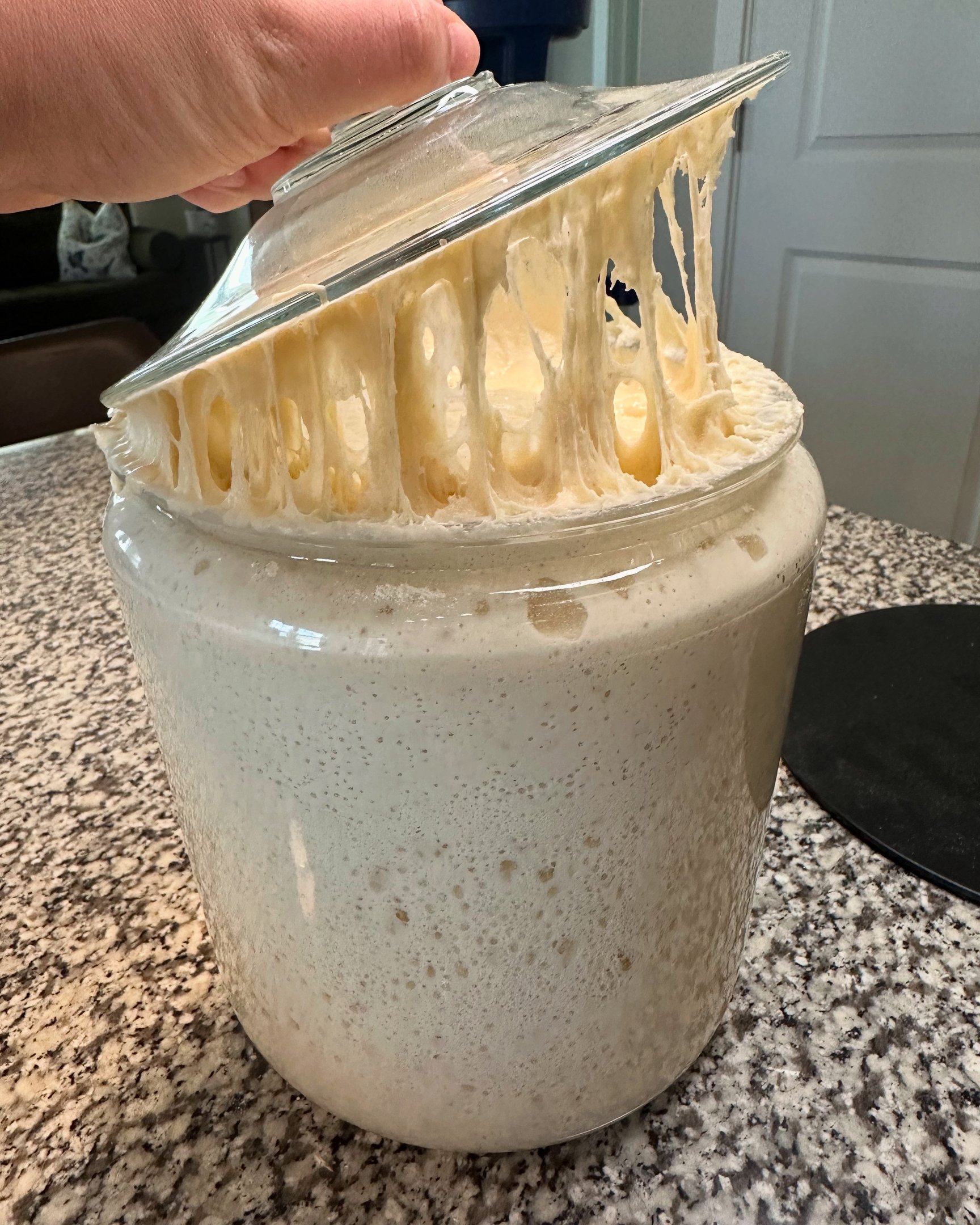
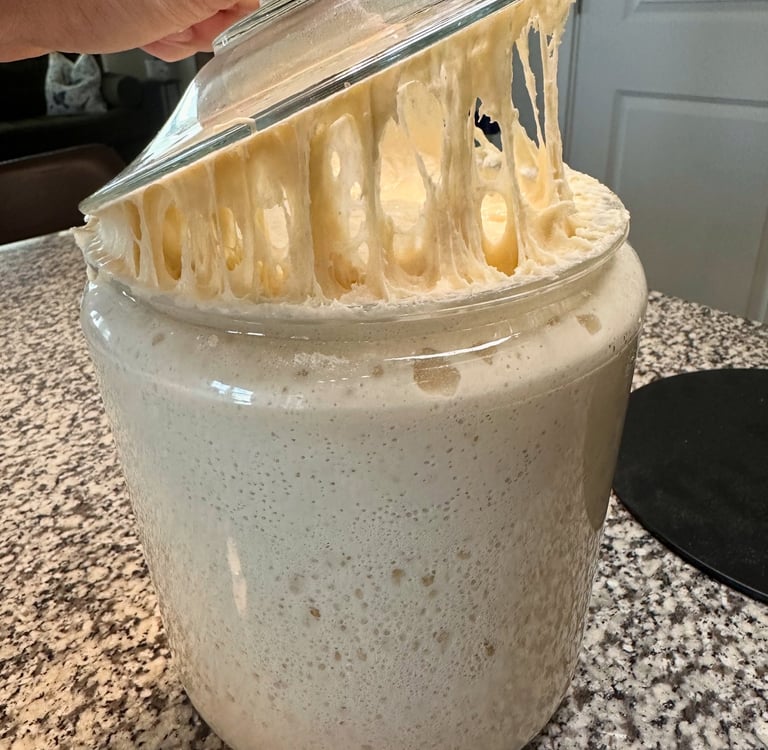
✅ Doubles in size within 4–6 hours after feeding
✅ Lots of bubbles throughout
✅ Has a pleasant, slightly tangy smell (like yogurt or fruit)
✅ Passes the “float test” (optional):
Drop a small spoonful into water—if it floats, it’s airy and ready to go!
Pro Tip: Don’t use your starter straight out of the fridge. Feed it first, wait for it to peak, then bake.
When It’s NOT Ready Yet
Give your starter more time if:
It doesn’t double in size
It smells off or like nail polish remover
It’s sluggish and flat after feeding
You may need to feed it more frequently or switch to a warmer spot in your kitchen.
Common Questions
Do I always have to discard?
Yes, if you want to keep your starter manageable and healthy. But don’t toss it—use it in discard recipes like pancakes, cookies, waffles, or crackers!
Can I use whole wheat or rye flour?
Absolutely! Rye in particular helps make your starter super active. You can feed with any kind of flour, just try to stay consistent once you find what works for you.
What if I forget to feed it?
Don’t panic! If it’s been less than 2 weeks in the fridge, just give it a few feedings to revive it. Sourdough is very forgiving.
Quick Maintenance Summary (Bookmark This!)
To Maintain at Room Temp:
Feed daily with 1:1:1 ratio (starter:flour:water). Use when doubled and bubbly.
To Maintain in Fridge:
Feed once a week. Let sit at room temp after feeding, then refrigerate.
To Use Starter:
Feed it, wait until it peaks (usually 4–6 hours), then use in your recipe.
To Refresh a Weak Starter:
Feed twice daily for a couple days at room temp.
Final Tips for Success
Label your jar with the feeding time so you can track how long it takes to peak.
Store your starter in a clear jar so you can easily see the bubbles and rise.
Name your starter—it makes it more fun to care for. (Mine is named "Dough-ris.” 😂)
Keep Baking and Keep Learning!
Maintaining your sourdough starter might feel intimidating at first, but once you understand the rhythm, it becomes a super simple and satisfying part of your baking routine. Just feed it, watch it bubble, and enjoy turning flour and water into beautiful homemade bread.
You’ve got this! 💪
Sourdough
Explore delicious sourdough recipes and tips today!
Make sure to follow us on our social media platforms!
contact us
Custom Orders
theivoryoven.co@gmail.com
© 2025. All rights reserved.